
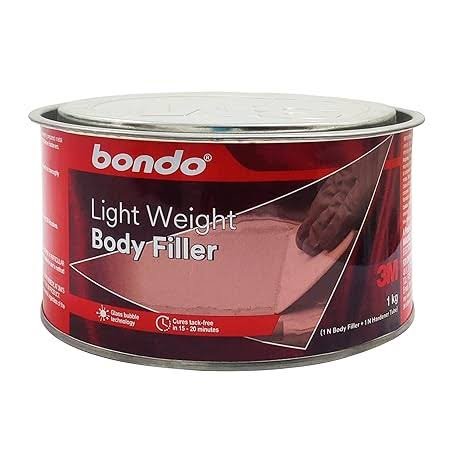
Bondo 1300 Drying Time: How Long Does Body Filler Take to Cure?
When you’re working with Bondo 1300 body filler, timing is everything. Apply it too thin or too thick, mix the hardener incorrectly, or sand too early, and you’ll end up redoing the repair.
We built our reputation on formulas that cure predictably, and understanding the exact drying and curing timeline for Bondo 1300 helps you finish automotive body repairs right the first time. This guide walks through the stages of cure, environmental factors that speed up or slow down the process, and how to know when the filler is ready for the next step.
How Bondo 1300 Body Filler Cures
Bondo 1300 is a two-part polyester resin system. When you mix the filler with the included cream hardener, a chemical reaction starts that transforms the paste from workable to rock-hard.
The hardener proportion controls the speed of this reaction. We recommend a golf-ball-sized amount of filler to a 1-inch ribbon of hardener — roughly 2% hardener by volume. More hardener speeds cure but can make the mix brittle and prone to pinholes; less hardener extends working time but risks incomplete cure.
Once mixed, you have about 5 to 10 minutes of working time before the filler starts to stiffen. After application, the surface will feel firm to the touch in 20 to 30 minutes at 70°F, but that firmness is not the same as full cure.
Stages of Drying and Curing
Understanding the difference between ‘dry’ and ‘cured’ prevents common mistakes. Bondo 1300 passes through three stages after you apply it.
Tack-Free Stage
Within 20 to 30 minutes at room temperature, the surface loses its stickiness. You can touch it without leaving a fingerprint, but the filler underneath is still soft. Do not sand yet — you’ll gum up the paper and gouge the repair.
Sandable Stage
After about 30 to 45 minutes, the filler hardens enough to shape with 80-grit sandpaper. This is the ideal window for rough shaping, because the material cuts easily and doesn’t load the abrasive. If you wait longer, it becomes harder to sand but more durable.
Full Cure
Full chemical cure takes 1 to 2 hours depending on temperature and hardener ratio. At this point the filler has reached maximum hardness and adhesion. You can apply primer, additional coats, or final finish work without risking shrinkage or soft spots. The polyester resin chemistry that makes body filler possible relies on this exothermic curing process to cross-link the material into a stable, sandable solid.
Temperature and Humidity Effects on Cure Time
Bondo 1300 cures faster in warm conditions and slower in cold. At 80°F and low humidity, you can sand in as little as 25 minutes. At 60°F, that same mix may take 50 minutes to reach sandable firmness.
Cold slows the chemical reaction, and high humidity can interfere with adhesion to the substrate. We recommend working in a garage or shop kept between 65°F and 85°F for consistent results. If you must repair a vehicle outdoors in cooler weather, slightly increase the hardener ratio — but stay within our recommended range to avoid brittleness.
Direct sunlight and heat lamps accelerate cure, but uneven heating can cause the surface to skin over while the interior remains soft. If you use a heat source, keep it moving and avoid concentrated hot spots.

Hardener Ratio and Working Time
The tube of cream hardener that comes with Bondo 1300 is precisely formulated for our filler. Using too much or too little changes both working time and final properties.
A 2% hardener ratio by volume gives you about 5 to 10 minutes of working time and a 30-to-45-minute sandable cure at 70°F. If you double the hardener to 4%, working time drops to 3 to 5 minutes and the mix may cure so fast that it generates excessive heat and cracks.
Running below 1.5% hardener extends working time past 15 minutes, but risks incomplete cure — the filler may feel hard on the surface yet remain soft underneath, leading to shrinkage days or weeks later. Stick to the recommended ratio and adjust environmental temperature instead if you need more or less working time.

When to Sand, Prime, and Paint
Once Bondo 1300 reaches the sandable stage, start shaping with 80-grit or 120-grit sandpaper on a block or DA sander. Coarse grit removes material quickly without loading; finer grits smooth the contour but generate heat that can soften uncured filler.
After rough shaping, let the repair sit for the full 1-to-2-hour cure window before applying primer. Priming too early traps solvents and can cause the filler to shrink or the primer to lift. Once fully cured, wipe the surface with a clean cloth, apply an automotive primer, and proceed with your paint system.
If you’re building up multiple layers, let each coat cure completely before adding the next. Stacking wet filler on partially cured filler creates delamination and soft spots that will fail later.
Getting Bondo 1300 Cure Time Right
Understanding the stages of cure — from tack-free to sandable to fully cured — helps you time every step of an automotive body repair correctly. Bondo 1300 gives you a predictable 30-to-45-minute sandable window and full cure in 1 to 2 hours when you follow our hardener guidelines and work in a controlled environment.
Rushing the process or ignoring temperature and hardener ratios leads to soft spots, shrinkage, and repairs that fail weeks later. Take the time to let each coat cure completely, and you’ll get a rock-hard, paintable surface that lasts.
Notes
Bondo 1300 is sandable in 30 to 45 minutes at 70°F when mixed with the recommended 2% hardener ratio. Temperature, hardener amount, and layer thickness all affect this timing. Always test a small area before sanding the entire repair.
Yes, working in a warmer environment or using a heat lamp will accelerate cure. You can also slightly increase the hardener ratio, but stay within the recommended range to avoid brittleness and cracking. Never exceed 4% hardener or apply direct concentrated heat.
Sanding before the filler reaches sandable firmness will gum up the abrasive, create gouges, and leave a rough, uneven surface. The partially cured material will smear instead of cutting cleanly. Wait until the filler feels hard to the touch and does not dent under finger pressure.
Full chemical cure takes 1 to 2 hours at room temperature. At this point the filler has reached maximum hardness and you can apply primer or additional coats safely. Curing time is shorter in warm conditions and longer in cold.
High humidity can slow cure slightly and may interfere with adhesion to the substrate. We recommend working in a controlled environment between 65°F and 85°F with moderate humidity for the most predictable results and best adhesion.
No, each coat must fully cure before you add the next. Stacking wet filler on partially cured material creates delamination, soft spots, and eventual failure. Let each layer cure for at least 1 to 2 hours before applying additional filler.