
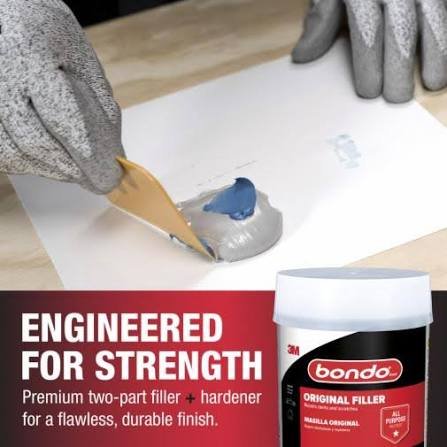
What Is Bondo 1600 Body Filler? A Complete Guide to This Automotive Repair Essential
Bondo has been a household name in automotive repair for decades, and our 1600 body filler remains one of the most recognized products in the category. Whether you’re repairing dents, filling holes, or smoothing imperfections in metal, fiberglass, or wood, understanding what Bondo 1600 actually is — and how it differs from other fillers — helps you choose the right solution for your project.
This guide breaks down the composition, uses, and application considerations for Bondo 1600, so you can work with confidence on everything from classic car restorations to home DIY repairs.
What Bondo 1600 Is Made Of and How It Works
Bondo 1600 is a two-part polyester resin-based body filler. The base is a thick paste made from unsaturated polyester resin combined with fillers like talc or calcium carbonate, which give it body and workability. When you mix it with the included cream hardener — a catalyst containing organic peroxides — a chemical reaction begins that transforms the paste from a spreadable putty into a hard, sandable surface in minutes.
This curing process is exothermic, meaning it generates heat as the molecules cross-link and harden. That’s why you’ll notice warmth during setup, and why working time is limited once you’ve added hardener. The cured filler bonds to properly prepared substrates and can be shaped with sandpaper, files, or grinders, making it ideal for building up damaged areas before painting.
Unlike spackling compounds or wood fillers that dry by evaporation, polyester resin body fillers cure through a chemical change that produces a much denser, more durable result. This makes Bondo 1600 suitable for structural and cosmetic repairs alike.
Primary Uses for Bondo 1600 in Automotive and Beyond
Our 1600 formula is designed first and foremost for auto body repair — filling dents, dings, rust holes, and collision damage on cars, trucks, motorcycles, and boats. It adheres well to bare metal, fiberglass, and properly prepped painted surfaces, which is why collision shops and DIY restorers reach for it when rebuilding quarter panels, fenders, and door skins.
Beyond automotive work, Bondo 1600 is also used in home repair and craft projects. You’ll find it filling gaps in wooden furniture, repairing fiberglass tubs and shower pans, rebuilding damaged boat hulls, and even sculpting custom parts or molds. Any project that requires a hard, sandable filler capable of bonding to rigid substrates is a candidate.
The key is proper surface preparation: clean, dry, and roughened with 80-grit sandpaper or a grinder. Bondo 1600 will not bond to oily, rusty, or smooth glossy surfaces, so degreasing and abrading the repair area is non-negotiable for lasting results.
Mixing, Application, and Working Time Considerations
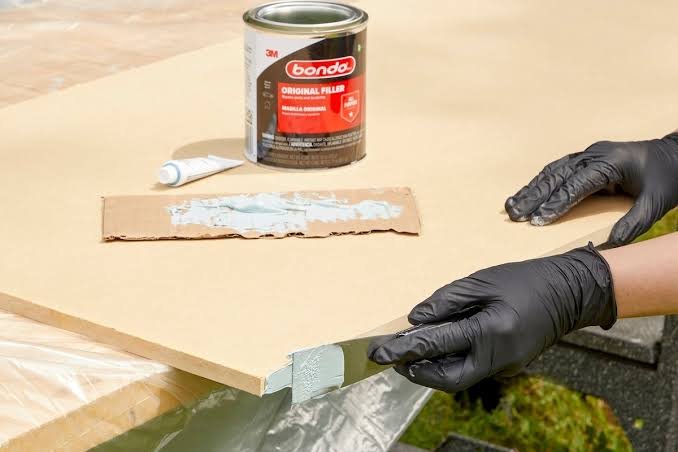
Bondo 1600 comes with a red cream hardener tube; the standard ratio is a ribbon of hardener roughly the size of a golf ball for every golf-ball-sized dollop of filler. Too little hardener and the filler won’t cure; too much and it kicks off so fast you can’t spread it before it sets. We recommend mixing on a clean, non-porous surface like a scrap piece of metal or a plastic spreader board, folding the two components together until the color is uniform with no streaks.
Once mixed, you have roughly 5 to 10 minutes of working time at 70-75°F before the filler begins to harden — less in warmer conditions, slightly more in cooler temps. Apply it with a plastic or metal spreader in thin layers, pressing firmly to eliminate air pockets. Bondo 1600 can be applied in layers up to a quarter-inch thick per pass; thicker applications may crack or not cure fully in the center.
After 20 to 30 minutes, the filler is hard enough to sand. We suggest starting with 80-grit to shape the repair, progressing through 120 and 180-grit for smoothing, and finishing with 220-grit or finer before priming. Always wear a dust mask when sanding cured polyester filler — the dust is an irritant.
How Bondo 1600 Compares to Other Fillers in Our Line
The 1600 formula is our original, general-purpose body filler — strong, easy to sand, and versatile enough for most repair jobs. It’s not the lightest filler we make, nor the most flexible, but it strikes a balance of strength, workability, and cost that has made it the go-to choice for decades.
We also offer lightweight fillers with microsphere additives that spread more easily and sand faster, premium gold-label formulas with finer texture for show-quality finishes, and fiberglass-reinforced fillers for structural repairs on severely rusted panels. Bondo 1600 sits at the center of that range: reliable, proven, and suitable for the vast majority of automotive and home repair tasks.
If you’re repairing a classic car, fixing a dent in a daily driver, or patching a hole in a fiberglass boat, Bondo 1600 is almost always the right starting point. Specialty formulas make sense when you have specific performance or finish requirements, but for straightforward body work, the original 1600 delivers consistent results every time.
Why Bondo 1600 Remains the Standard for Body Filler
Bondo 1600 has earned its reputation as the go-to body filler because it delivers reliable results across a wide range of repair scenarios. From automotive collision work to home DIY projects, our original polyester resin formula combines strength, workability, and ease of sanding in a product that professionals and weekend warriors alike trust.
By understanding what Bondo 1600 is made of, how it cures, and where it performs best, you can approach your next repair with the right expectations and techniques. Proper surface prep, correct mixing ratios, and patience during the curing and sanding stages will give you a smooth, durable finish ready for primer and paint.
Notes
Bondo 1600 is designed for rigid substrates like metal, fiberglass, and wood. It cures to a hard finish that doesn’t flex, so it’s not suitable for flexible plastic bumpers or panels that bend. For those applications, look for a flexible bumper repair filler specifically formulated to move with the substrate.
We recommend applying Bondo 1600 in layers no thicker than a quarter-inch at a time. Thicker applications may not cure completely in the center, leading to soft spots or cracking. If you need to build up more material, let each layer harden fully before adding the next.
Yes, always prime cured and sanded Bondo 1600 before applying topcoat paint. Body filler is porous and will absorb paint unevenly without a primer barrier. Use an automotive primer-surfacer, let it dry, sand smooth, and then apply your finish coats.
Unopened Bondo 1600 can be stored for up to two years in a cool, dry place away from heat and direct sunlight. Once opened, keep the lid tightly sealed and use within six months for best results. If the filler has separated or developed a strong chemical odor, it’s past its prime.
Bondo 1600 will fill holes, but it won’t stop rust from spreading. You must remove all rust and treat bare metal with a rust converter or etch primer before applying filler. For large rust-through holes, use a fiberglass-reinforced filler or weld in a patch panel first, then finish with Bondo 1600 for smoothing.
Cured Bondo 1600 is water-resistant but not completely waterproof. It will withstand occasional exposure to moisture, but prolonged immersion or constant wetness can cause it to absorb water and eventually degrade. Always seal repaired areas with primer and paint for long-term protection against the elements.